Quality Systems

Plastic injection molding quality control is essential. Without a quality benchmark, accuracy and precision become moving targets. Parts are subject to inconsistencies, defects, or failure. Injection molding processes lack repeatability and adaptability. You could be facing a high-dollar spend with little — if anything — to show for it.

What Sets Kaysun Apart

A lot is riding on the quality of your injection molded parts. It’s a smart business decision to partner with a molder that is passionate about plastic injection molding quality engineering and is prepared to hold your projects — and themselves — to uncompromising standards.

REVIEW OUR DEFECT-FREE PARTS WHITEPAPER

Our in-house Quality Lab serves as a hub for cross-functional collaboration, comprehensive testing, and unparalleled injection molded part and process quality management.

Key Quality Processes


Kaysun is a trusted partner to manufacturers in many industries. Our broad experience gives us the unique ability to apply learnings from one market to similar situations in another, often resulting in fresh perspectives and powerful innovation.

Automotive and medical manufacturers typically require variations on the same quality themes, as dictated by their respective industries.

As such, Kaysun quality engineers are knowledgeable about and continue to expand in quality-related areas that serve both, following the quality process principles of:

  • Advanced Product Quality Planning (Automotive)
  • Product Validation (Medical)

Certifications

The knowledge and integrity behind the certifications we hold reflect Kaysun’s commitment to our customers. Every injection molded part and process we engage with meets or exceeds rigorous industry standards.

Cutting-Edge Equipment and Technologies

Quality control checks for injection molding require cutting-edge testing equipment, like that found in our in-house quality lab:

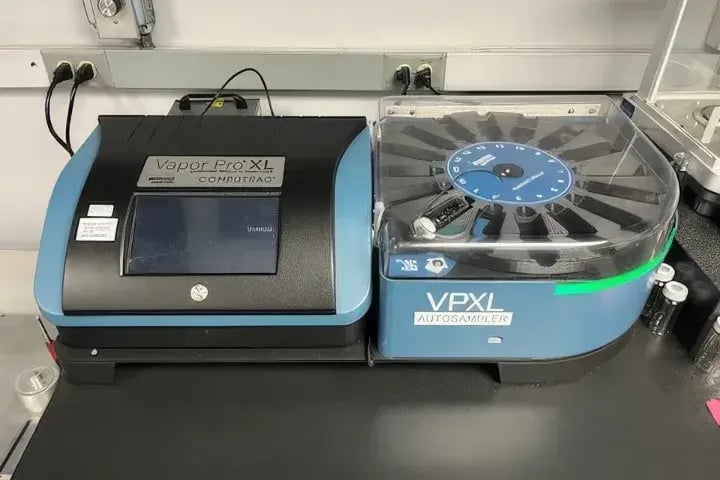
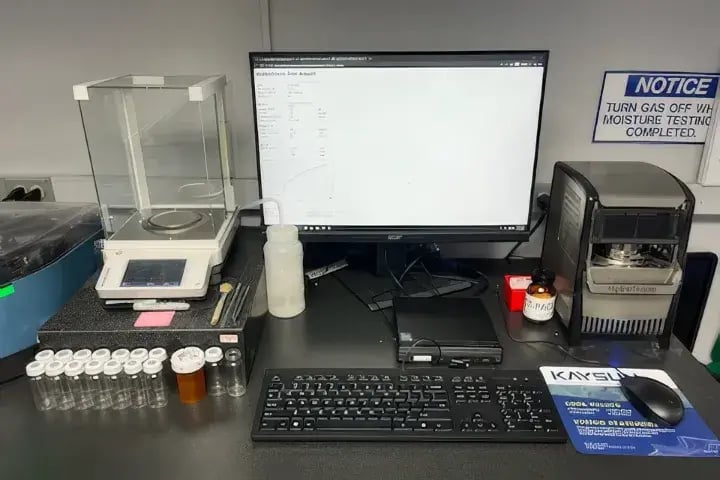
  • Moisture content testing: Even trace amounts of moisture, sometimes as little as 0.01% by weight, can cause structural defects, cosmetic issues like splay and streaking, or processing problems that aren't always visible until a part is already in production. Kaysun tests every resin lot before startup, then continues monitoring throughout the run, as often as every eight hours for moisture-prone materials like nylon. Our Vapor Pro XL heats resin samples and reads moisture through a vapor sensor, built for the speed and automated sample handling high-volume production requires. Our Hydrotracer measures moisture through a chemical reaction with calcium hydride, giving our quality technicians the finer manual control they prefer for materials that absorb moisture quickly. Running both in tandem lets us catch an out-of-spec reading before it ever reaches a customer

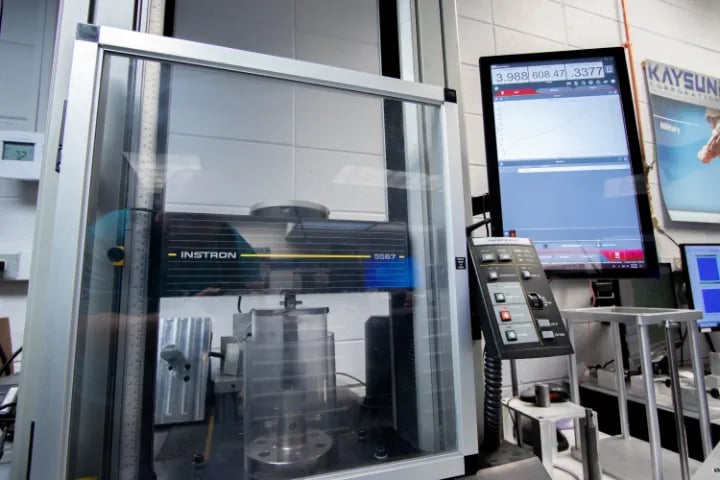
  • Structural (destructive) and fatigue testing: Instron is a world leader in destructive testing methodologies. In-house stress and cyclical testing to failure lets Kaysun engineers qualify specifications or adjust materials before or during production. Pulling representative samples from live production lines for weld strength, impact strength, and other specific testing gives our engineers insight into how and why materials fatigue over time. A part earns Kaysun's high-quality designation only after it passes this level of scrutiny

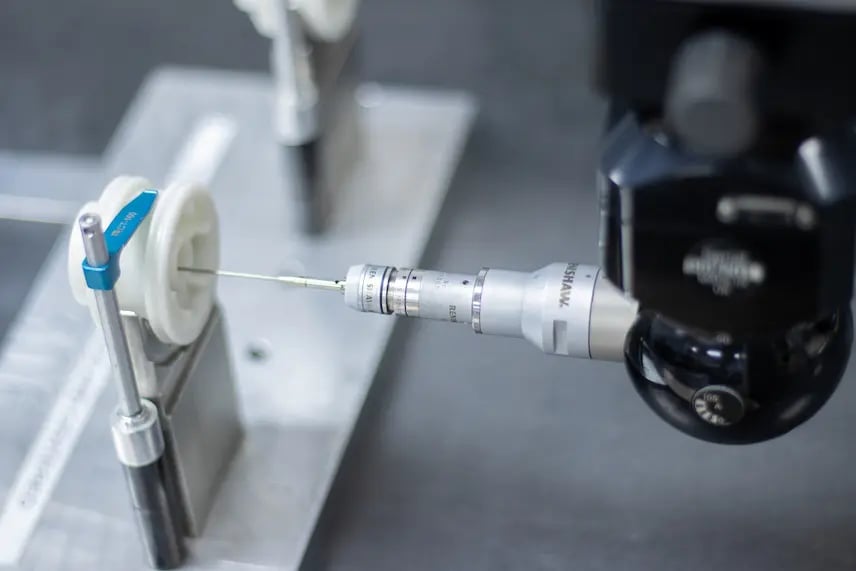
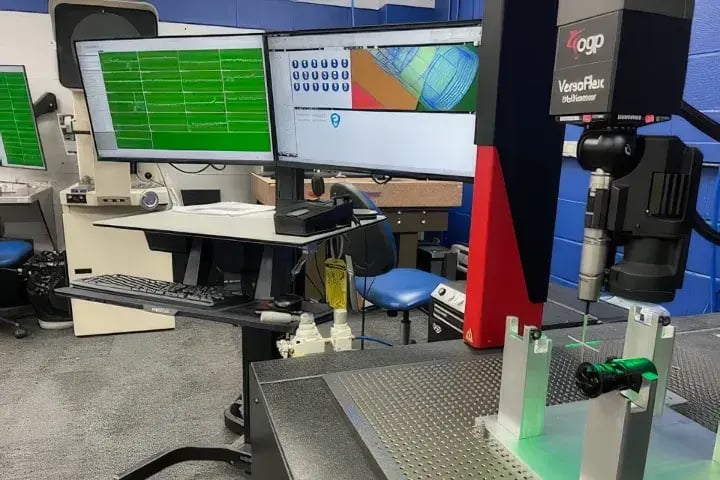
  • CMM inspection: Our OGP Flex Point coordinate measuring machine puts camera, laser, and probe technology on the same rotating head, so we can inspect a part from any angle without repositioning it. That matters most on complex, multi-port geometries, like valve bodies with ports running in several directions: parts that once had to be physically reoriented mid-inspection now get measured in a single pass, cutting inspection time on comparable parts by roughly 20% while improving accuracy. Kaysun engineers use CMM testing to verify that produced parts match design specifications exactly, including on features and angles a traditional probe-only CMM would struggle to reach

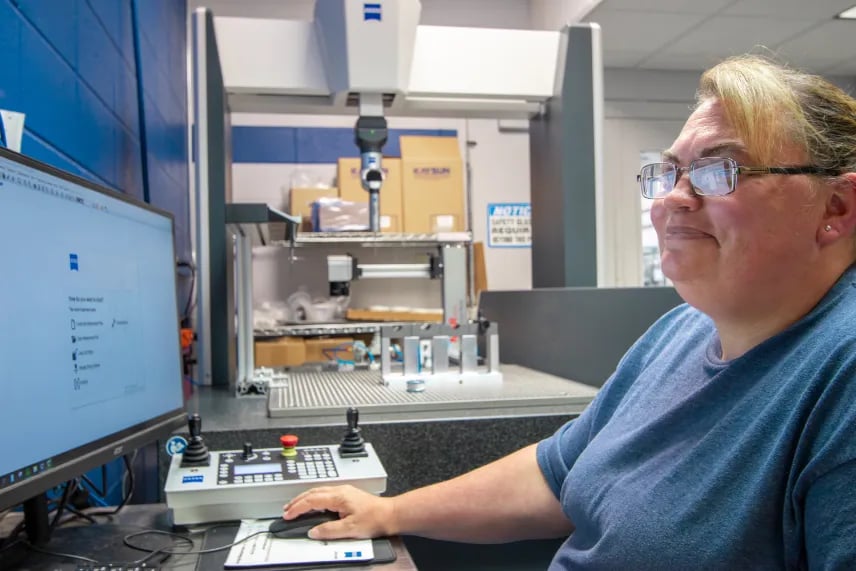
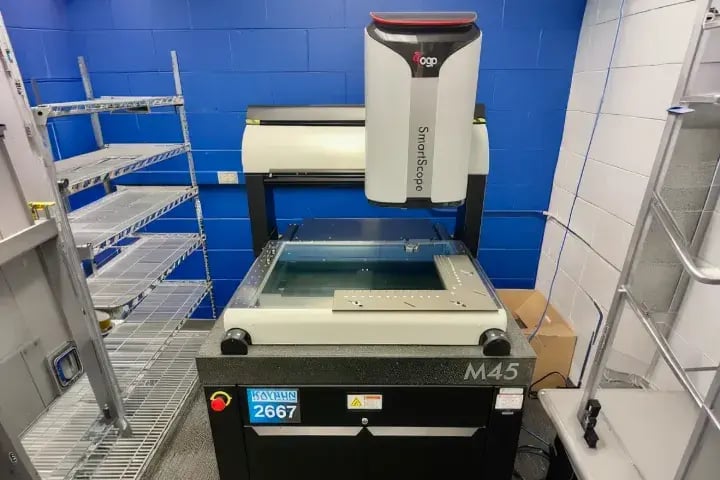
  • Non-contact optical inspection: Our OGP SmartScope M45 measures parts using vision-based edge detection and focus depth rather than physical contact — critical for soft-touch materials like TPEs and TPUs that a traditional probe would compress and distort. It's especially valuable on parts designed to feel tactile in a user's hand, where an accurate as-molded measurement depends on never touching the part at all

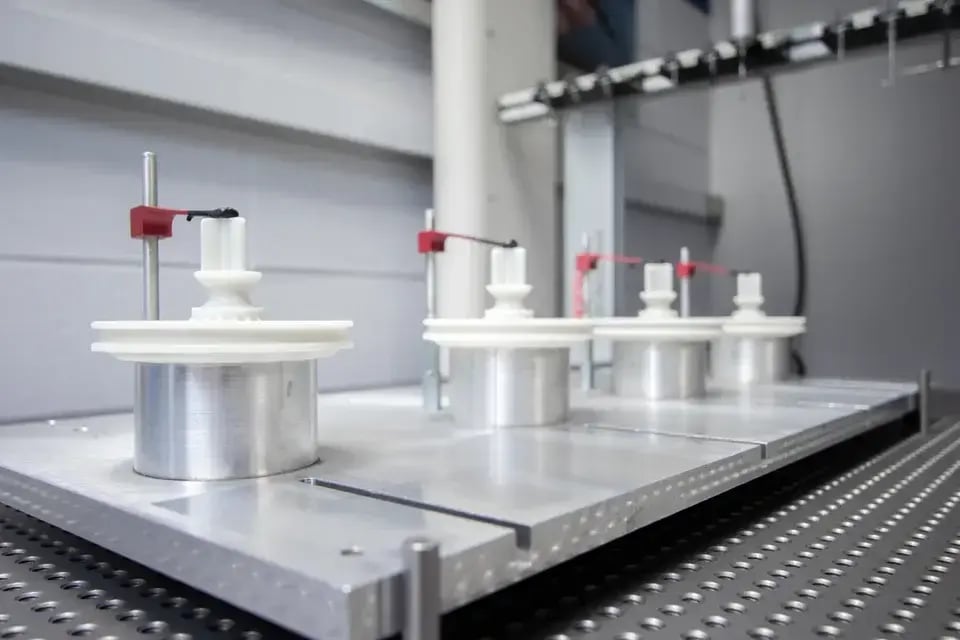
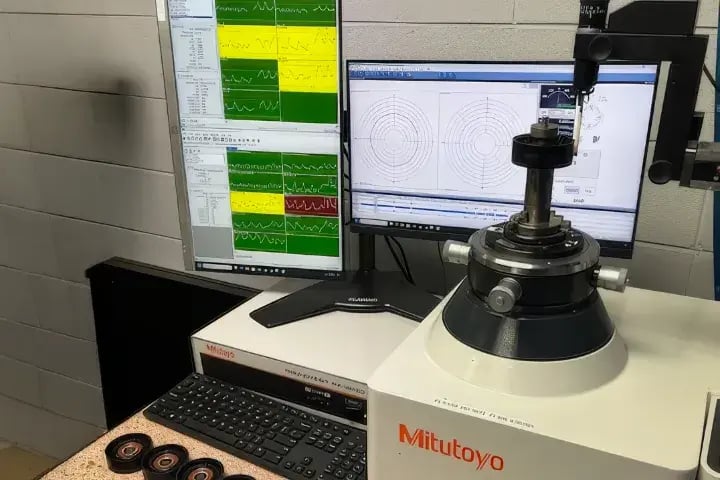
  • Roundness and harmonics testing: Our Mitutoyo RA1600 roundness tester measures roundness and runout to tolerances under 0.1 millimeter on rotational parts like idler pulleys, and can also test for harmonics — the frequency a part gives off as it spins. Tighter roundness and runout control translates directly into quieter, smoother performance in the field, which matters on automotive components where noise, vibration, and harshness are part of the spec

  • CT inspection: Computer tomography (CT) is a nondestructive technique for visualizing the interior of injection molded parts. This "inside out" analysis helps identify non-visible defects that could compromise part quality

Kaysun quality engineers working independently or in cross-departmental collaboration can verify process stability and product viability while in production. The ability to test proactively during development or reactively in response to production issues is a capability few molders can offer.

Vapor Pro XL Moisture Tester
Hydrotracer Moisture Tester
KSN-quality-systems-11
OGP Flexpoint CMM
OGP SmartScope M45 Vision System
Mitutoyo-RA1600-Roundness-Tester

Quality Systems FAQs

What is IQ, OQ, PQ in injection molding for medical devices?

IQ (Installation Qualification), OQ (Operational Qualification), and PQ (Performance Qualification) are the three pillars of medical device process validation. IQ confirms that the equipment, tooling, and environment are correctly installed and documented. OQ establishes and verifies critical process parameters under controlled conditions. PQ ensures the process performs reliably under normal production settings. These phases are essential for regulatory compliance under FDA 21 CFR Part 820 and ISO 13485.

How does APQP support quality in automotive injection molding?

Advanced Product Quality Planning (APQP) is a structured methodology used in the automotive industry to ensure product quality from concept to production. It includes cross-functional activities such as design reviews, FMEA, process flow diagrams, control plans, and capability studies. For injection molding, APQP helps identify potential risks early and establishes robust quality checkpoints, reducing variability and ensuring consistent part performance throughout the product lifecycle.

What does CTQ mean in injection molding?

CTQ (Critical to Quality) features are essential characteristics that influence how well a molded part performs and complies with requirements. In injection molding, CTQs often include dimensional tolerances, cosmetic surfaces, material properties, or structural integrity. Identifying CTQs during design and process development ensures they are monitored and controlled through appropriate tooling, production, and inspection methods. Managing CTQs effectively minimizes the risk of defects and product failures.

Why is PPAP required for injection-molded parts in automotive?

The Production Part Approval Process (PPAP) is used by automotive OEMs and Tier 1 suppliers to confirm that a production process consistently yields parts that meet all engineering and quality requirements. A complete PPAP package includes design documentation, material certifications, dimensional results, process capability data, Gage Repeatability and Reproducibility (R&R) studies, and control plans. PPAP provides assurance of stable production and supports traceability and regulatory readiness.

What certifications does Kaysun hold for quality assurance?

Kaysun is certified to ISO 13485:2016 (medical device quality management) and IATF 16949 (automotive quality systems). Kaysun also holds MedAccred Plastics accreditation, a globally recognized credential for medical device suppliers that ensures compliance with critical manufacturing processes, such as injection molding and extrusion, to reduce risk to patient safety. Kaysun is one of only a handful of injection molders that has MedAccred accreditation, supporting work in regulated industries and adherence to rigorous quality, documentation, and process validation protocols. 

What role does process capability (Cpk/Ppk) play in injection molding quality?

Cpk (Process Capability Index) and Ppk (Process Performance Index) are statistical tools used to measure how well a process produces parts within specified limits. In injection molding, they help quantify process stability and part consistency. A higher Cpk or Ppk indicates a more capable and predictable process. These metrics are especially important for dimensions tied to safety, function, or compliance, and are often required by regulated industries to support validation and audit readiness.

How is scientific molding used to improve part quality?

Scientific molding uses data-driven methods to optimize and control injection molding processes. It involves capturing key variables like injection pressure, fill time, cooling rate, and gate freeze to establish a repeatable, robust process window. By focusing on in-cavity behavior and material response, scientific molding improves dimensional accuracy, reduces defects, and supports traceability. It’s particularly valuable in applications where consistency, tight tolerances, or regulatory compliance is critical.

What is included in a mold qualification protocol?

A mold qualification protocol ensures that a tool can reliably produce parts that meet design, dimensional, and performance requirements. It often includes short-shot studies, first article inspections, dimensional layouts, Design of Experiments (DOE) trials, and capability studies. For regulated industries, mold qualification may be part of a broader validation effort, including IQ/OQ/PQ or PPAP. The protocol verifies that tooling, material, and process are aligned before full-scale production begins.

How does traceability support quality in injection molding?

Traceability links each injection-molded part to its production history, including raw material batch, machine settings, operator data, and inspection results. In regulated industries like medical and automotive, traceability is essential for risk mitigation, recall management, and audit compliance. It enables root cause analysis and corrective action in the event of a defect or failure. Effective traceability systems may include serialization, barcode scanning, and digital production records.

What does “validation-ready” mean when choosing an injection molder?

A validation-ready injection molder has the systems, documentation, and experience required to support formal validation processes such as IQ/OQ/PQ and PPAP. This includes well-established quality procedures, qualified personnel, and the ability to provide data and documentation for compliance audits. Choosing a validation-ready injection molding partner helps accelerate product launch timelines, ensures regulatory alignment, and reduces risk in critical applications.

Does your company fit our ideal customer profile?

Complete the form to request a free consultation with our plastic engineering experts.