When a medical OEM evaluates an injection molding supplier, the stakes are categorically different from a commercial or industrial sourcing decision. In medical device manufacturing, a process gap that goes undetected during an audit has ripple effects across product quality and patient outcomes. Moreover, with a medical device, somebody's life or quality of life will depend on it, so due diligence takes on added emphasis.
For new supplier relationships, a standard OEM audit reviews the quality management system for robustness. For established suppliers, audits occur on a defined schedule of every three to four years, or in response to quality or delivery issues. What changes in medical is the severity of the consequences when the system falls short.
A weak or incomplete audit doesn't just create operational risk. Unidentified gaps persist into production, increasing the probability of escapes that can mean field failures, corrective actions, recalls, revalidation costs, and regulatory exposure. Those costs routinely dwarf whatever was saved by accelerating qualification.
To prevent expensive oversights, OEM quality and procurement teams need to participate in auditing. Quality evaluates system integrity; procurement assesses how findings affect supply and specification compliance.
ISO 13485 is the baseline. It is the international quality management system standard for medical device manufacturing and the first credential any medical OEM should verify. Without it, the infrastructure required for validated medical production isn't in place.
Certification audits are sampling exercises. An external auditor can identify gaps that surface during sampling, but cannot review the entire system. Similarly, the certification confirms the infrastructure exists, but it doesn't guarantee how deeply that infrastructure is embedded in daily operations.
Why Does MedAccred Accreditation Matter More?
For medical injection molders, MedAccred Plastics accreditation (administered by the Performance Review Institute) represents a meaningfully higher standard. Where ISO 13485 may be seen as "an inch deep and a mile wide" surface-level review, a MedAccred accreditation audit is "a mile deep and an inch wide," tracing a specific process all the way through to verify that what a supplier says they do is what they actually do.
For OEMs, that distinction matters. MedAccred signals that a supplier has been subjected to a rigorous, process-level audit by an independent body with medical device expertise. It raises confidence that the quality system is functioning as documented. Kaysun has held MedAccred Plastics accreditation for consecutive years since 2020, and is one of the few U.S. injection molders with this distinction.
Validation documentation is one of the highest-signal areas of a medical supplier audit. Reviewing IQ, OQ, and PQ records is not simply about confirming that protocols exist. It's key in evaluating whether those protocols were designed to identify and control sources of variation.
A medical injection molder's well-developed validation protocol:
The process capability index (Cpk) gives OEMs something concrete: how consistently the process produces parts within specification, and how close nominal output is to target. Higher Cpk values indicate a process is highly capable, stable, and consistently produces parts within specification with minimal defects.
One of the most important questions to probe in a medical supplier audit: does the molder validate only at nominal settings, or across the full validated operating window?
Validating at nominal settings confirms the process works under ideal conditions. Using Design of Experiments (DOE) to validate across the full operating window gives the molder a defined range within which they can adjust for real-world variation and continue to produce conforming parts.
The wider the validated operating window, the more flexibility the molder has to address variation from resin, tooling wear, environmental changes, and other sources that emerge over the production lifecycle.
Scientific molding is a structured, data-driven methodology for developing and controlling injection molding processes. Since the majority of medical components involve complex geometries, tight tolerances, or highly engineered resins, scientific molding capability isn't optional.
At the core of scientific molding is in-process feedback that monitors and controls each production cycle. At Kaysun, that feedback comes from a pressure transducer embedded in the tooling that reads plastic pressure throughout the full injection and solidification cycle, generating a pressure profile for every shot.
That profile can be used to:
The result is a process that does not rely solely on downstream inspection. Variation is identified at the point of production.
A molder that answers these questions vaguely presents a different risk profile than one that can walk through their methodology in detail and show you the data.
Tooling is often treated as a background consideration during supplier audits. It shouldn't be.
Tooling decisions made during Design for Manufacturability (DfM) analysis directly affect validation stability over the life of the program. Properly designed tooling reduces the probability of dimensional drift, tooling damage, and premature wear that determine near-term part quality. Further, these factors impact whether the validated process remains stable years into production or requires re-validation to address tooling-related changes.
Tooling considerations to assess during an on-site medical injection molder audit:
The answers reveal whether tooling is being managed proactively as a controlled asset, or treated reactively when problems arise.
Collaboration between a molder's tooling team and an OEM's engineering team is essential for gauging re-validation risk and identifying tradeoffs before an issue arises. This combination of expertise and proactivity signals a meaningfully different injection molding partnership than one focused narrowly on getting parts to run.
Beyond proper injection molding equipment, tight-tolerance medical components require:
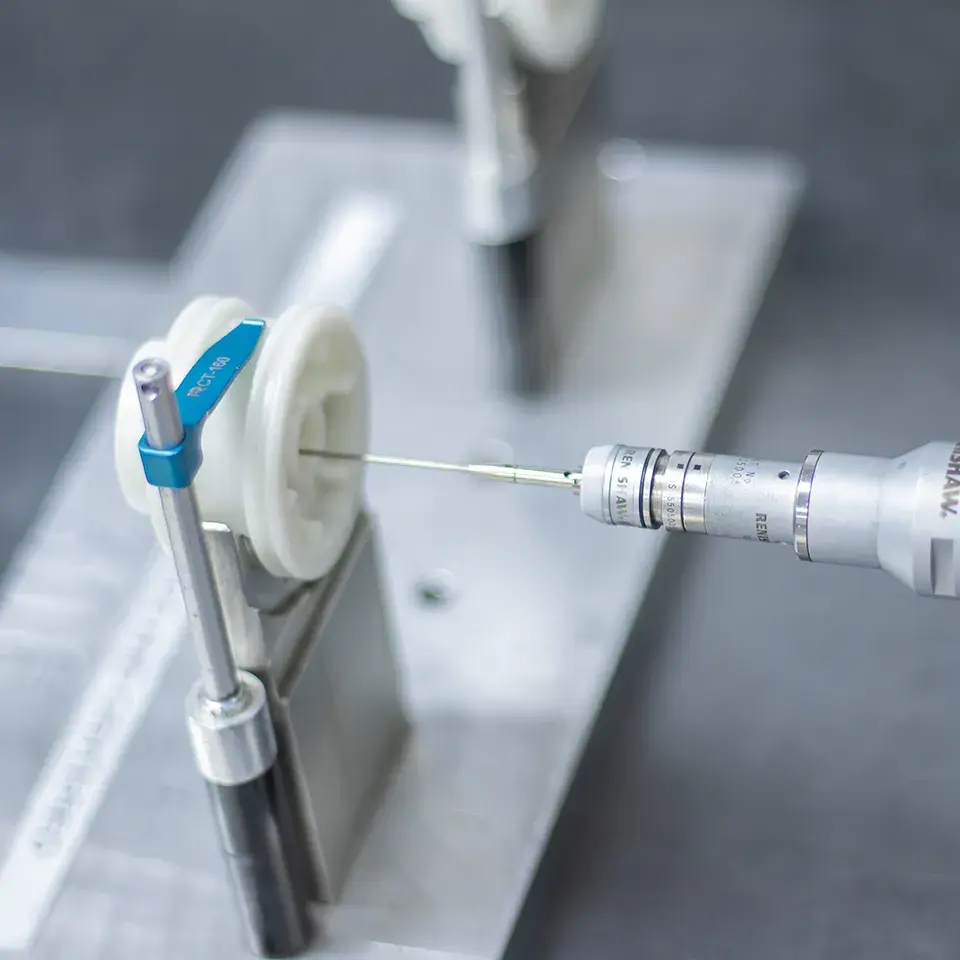
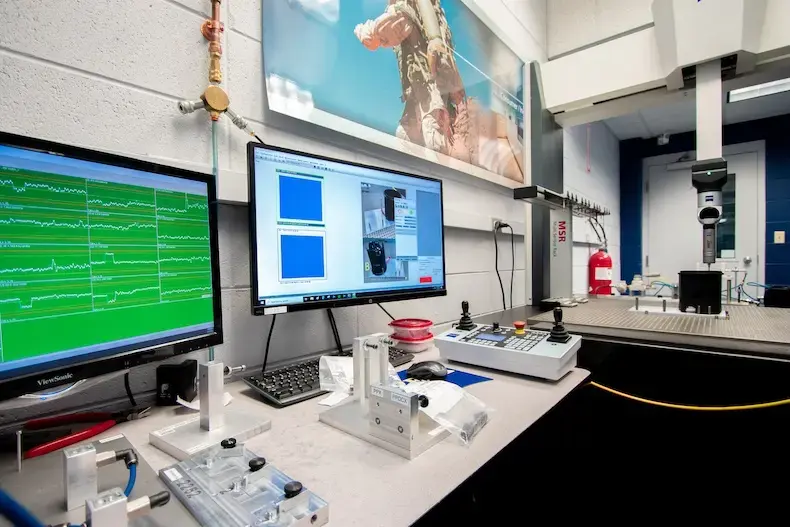
OEMs evaluating a molder's inspection capabilities should look at the combination of equipment, people, and systems. Equipment is important, but CMM or CT scanning capability is only as useful as the engineering knowledge applied to using it.
Evaluation should focus on inspection planning, not just the equipment list:
The goal is to be responsive to a developing trend, not reactive to a failure. A molder with mature process controls will have protocols that trigger a review when measurements begin to drift, not after defects have been produced.
A molder can answer every question on a pre-audit questionnaire correctly and still fail to perform as expected in production. The on-site visit is where the gap between documented systems and operational reality becomes visible.
Being on site allows OEMs to get the lay of the land, and see how a molder's day-to-day operations actually run instead of taking their word for it. Firsthand knowledge of a molder properly executing a program per their procedures provides both evidence of expertise and peace of mind.
The most valuable on-site time is spent on the production floor, not in a conference room. Floor access allows OEMs to ask questions while physically observing tooling, inspecting workstations, reviewing in-process paperwork, and watching how operators follow procedures.
There are two things that can only be assessed in person: culture and the depth of the knowledge base.
A quality-first culture is visible in how people talk about their work. When production speed and quality are in conflict, which one wins? The answer is observable in how decisions are made, how problems are escalated, and how tradeoffs are discussed.
Team depth matters because complex medical programs require people who understand how to run a process, why it was developed the way it was, and how to troubleshoot it intelligently.
During OEM facility visits, Kaysun deploys a cross-functional team that includes quality, engineering, project management, plant management, and the CEO to answer questions and provide well-rounded information. That level of engagement is itself a signal of how seriously the supplier treats the partnership.
Qualifying a process and sustaining a process are not the same thing.
A molder that produces excellent qualification data and then manages production reactively by waiting for out-of-specification results to trigger a response delivers a far different experience than one with proactive monitoring systems that catch drift before it produces defects. That difference and associated risk aren't visible in validation documentation. They show up in production metrics over time.
Ask to see how a molder tracks quality performance at qualification and over time. At Kaysun, cost of quality is the primary metric, and includes tracking cumulative scrap rates, total labor, and resource costs of maintaining conforming product. A supplier with strong sustained process control shows stable or improving cost-of-quality trends. On the other hand, a supplier that qualifies well but struggles in production will show variability that doesn't improve.
Monitoring systems that detect process drift need to be in place, actively used, and verified as accurate. A medical molder audit should include questions about:
The answers reveal whether monitoring is integrated into production management or treated as a compliance exercise.
A supplier that can qualify a program may not be able to sustain it at volume. Warning signs include:
Scalability is as much an attitude question as a systems question. How leadership thinks about growth — conservative and proactive vs. optimized for near-term throughput — generally predicts behavior when customer volumes increase.
For single-source suppliers providing safety-critical components, the audit stakes are especially high. The cost of quality failure extends beyond defective parts to:
The costs compound quickly, and they are almost always larger than the cost of a more rigorous qualification process at the outset.
A common OEM mistake is comparing unit cost alone between a fully qualified supplier and a lower-cost alternative. The relevant comparison includes the probability-weighted cost of a quality event at each supplier, multiplied by the cost of remediation in a regulated medical environment. When those numbers are included, the economics of the higher-capability supplier almost always improve significantly.
For components with long re-validation lead times such as those in medical injection molding programs, any disruption requiring re-validation is not just an operational problem. It's a program risk that can delay finished device availability, affect regulatory filings, and trigger customer escalations.
Auditing with sufficient rigor to identify risks and potential degree of impact before committing to a supplier relationship is simply good program management.
Review the molder's quality management system documentation before you arrive on site, so that your on-site time can be spent observing operations rather than learning about them.
OEMs that arrive already familiar with the documented systems are positioned to spend their limited audit time verifying that those systems function as documented, which is where the real intelligence lives.
The molder that passes an audit and the molder that is genuinely ready for a complex medical program both have the right documentation. What separates them is what happens when you watch them work.
How long does a medical injection molder audit typically take? A thorough audit usually spans one to two days on-site. Pre-audit document review (quality manuals, validation records, certifications) should happen beforehand so floor time isn't wasted on paperwork. Complex programs with multiple validated components may warrant a longer visit or a phased audit approach.
How often should a qualified medical molder be re-audited? Most medical OEMs audit established suppliers every two to three years, or sooner if quality escapes, corrective actions, or significant process changes occur. Regulatory changes or new product programs at the molder can also trigger an unscheduled audit regardless of the regular cadence.
Can a remote or virtual audit substitute for an on-site visit? Remote audits gained acceptance during COVID-19 but remain inferior for medical molding qualification. They can supplement documentation review but cannot replicate floor observation, watching operator behavior, equipment condition, and workstation organization in real time. For initial qualification of a safety-critical supplier, on-site is strongly preferred.
What's the difference between a supplier audit and a supplier qualification? An audit assesses whether a supplier's quality system meets requirements at a point in time. Qualification is the broader process — including audit, capability studies, validation runs, and approved supplier listing — that formally authorizes a supplier to produce components for a regulated medical program.
Should a molder ever audit their own sub-suppliers on a medical OEM's behalf? Yes. Tier-2 supplier risk is real, particularly for resins, colorants, and tooling components. A mature medical molder will have an active supplier qualification program and be able to demonstrate that critical sub-suppliers meet defined quality requirements, giving the OEM visibility into the supply chain beyond the first tier.
Kaysun is ISO 13485-certified and MedAccred Plastics-accredited. Our quality managers and focused, cross-functional teams work with medical OEMs on complex, regulated programs from DfM through long-term production and are available to answer your audit questions, including how Kaysun approaches process validation, scientific molding, and sustained process control.
Download our Injection-Molded Part Quality Control Checklist to learn more about how experienced custom injection molders help OEMs manage time, budgets, and outcomes.




Challenge A manufacturer of handheld gas detection instrumentation brought Kaysun …
READ MORE

The 30-second Summary ISO 13485:2016 is the international quality management syste…
READ MORE
The 30-second Summary Medical molding needs validation when final results can’t be…
READ MORE