Medical molding needs validation when final results can’t be fully verified by inspection/testing
IQ confirms readiness; OQ defines controllable parameter boundaries; PQ confirms repeatability in production
A solid package includes validation plan + approved protocols + executed records/raw data
Acceptance criteria, deviations/dispositions, and final reports must be documented
Post-PQ, the “validated state” must live in monitoring, training, and change control
IQ/OQ/PQ is the FDA’s three-step qualification method used to prove an injection molding process is installed correctly (IQ), operates within defined limits (OQ), and remains consistent during actual production (PQ). Medical injection molders must be able to provide documented, objective evidence (data, protocols, and reports) that demonstrates the process is validated, stable, and controlled.
With the FDA Quality Management System Regulation (QMSR) now in effect, U. S. medical device quality system expectations more closely align with ISO 13485:2016 quality management systems (QMS) standards. As a result, OEMs and suppliers are expected to follow a clear, risk-based, document-driven approach to qualification, particularly when the final product can’t be fully verified through subsequent inspecting or testing.
To help you qualify medical injection molding programs with repeatable results and defensible evidence, we’re breaking down IQ/OQ/PQ definitions, deliverables, and responsibilities among Quality and Engineering teams.
IQ/OQ/PQ is a structured three-part method for objective process validation:
IQ (Installation Qualification): proves the setup is right (press, tool, utilities, peripherals)
OQ (Operational Qualification): proves the process window (defined limits/action levels)
PQ (Performance Qualification): proves process stability and part consistency during production (normal cadence and repeatability across time, shifts, and lots)
The FDA requires process validation when results cannot be fully verified through later inspection and test. In medical injection molding, this commonly shows up when:
Critical to Quality (CTQs) aren’t practical to inspect 100% (or are destructive to test)
Functional risk is tied to the process (knit-line strength, voiding, micro features, etc.)
Multi-cavity tools introduce cavity-to-cavity variation risk
The program requires traceability, monitoring, and controlled change management
Medical validation can go sideways when teams “run studies” before they define what success looks like. Validation becomes a controlled exercise when these steps are followed:
Dimensions/tolerances tied to function
Visual requirements (where applicable)
Material requirements (grade, lot traceability expectations, resin handling requirements)
Cleanliness/contamination expectations (if applicable)
What you’ll measure, how often, with what method
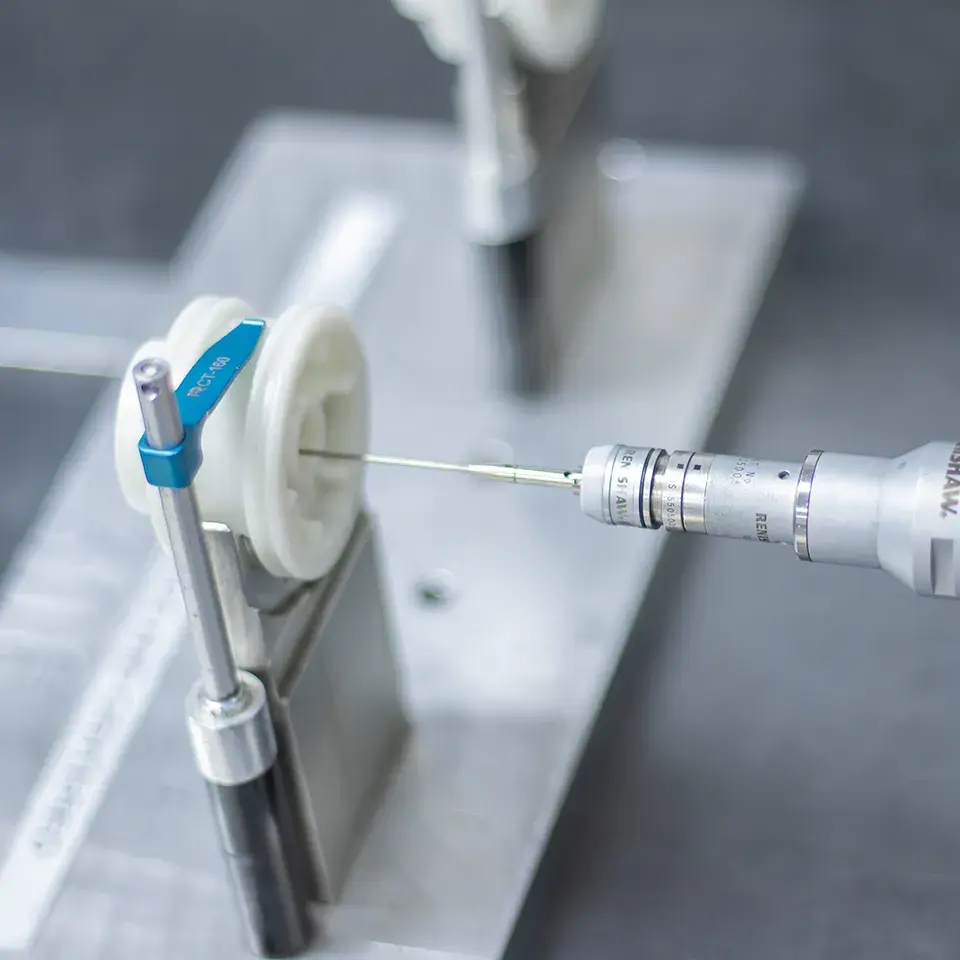
Gage capability considerations for tight tolerances/micro features
Cavity identification strategy (when multi-cavity)
Define what can go wrong (risk inputs)
What failure modes matter
What signals will be monitored
What actions will be taken when trends appear
Did we build it to requirements?
Verification confirms that all specified requirements are met, usually by inspection, measurement, or testing.
Does it consistently work for the intended use?
Validation uses objective evidence to confirm that the requirements for the intended use can be consistently fulfilled.
Is the process reliable and repeatable?
Process validation draws on test runs and documented results to show the process consistently makes in-spec parts under defined settings.
In medical injection molding, you verify dimensions on a sample of molded parts. However, you validate the molding process because end inspection alone cannot reliably catch parameter-driven failures.
A medical injection molding validation package usually includes:
IQ proves the medical injection molding system is ready for controlled operation, not simply “powered on.”
Press identification & configuration control (machine ID, controller configuration, recipe storage/backup, operator/administrator access levels)
Tool identification & revision control (tool ID, cavity count, sensor list, hot runner configuration, revision history)
Utilities verification including water circuits, temperature control capability, and compressed air (when used)
Peripherals required to run the validated process, usually dryers (moisture control), chillers/TCUs (temperature stability), material handling systems (loader/blender control, segregation approach), and automation/end-of-arm-tooling (EAOT)
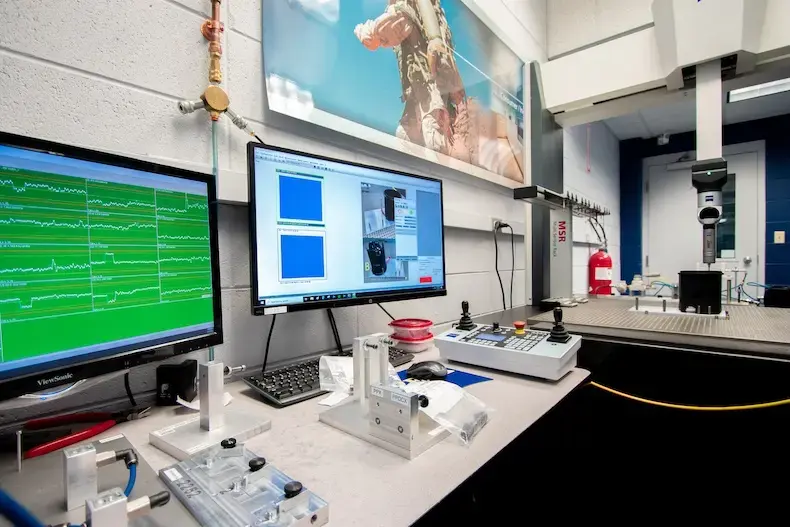
Calibration/traceability readiness provides status of instruments used to accept CTQs
Environmental requirement set as necessary if the part or process is cleanroom-adjacent or has contamination controls
Approved IQ protocol and executed checklists
Installation/utility verification records
Calibration and maintenance status evidence for equipment/instruments
IQ summary/report including deviations and dispositions
OQ proves the injection molding process is controllable, and it defines the production run limits (parameter ranges and boundaries).
A structured characterization plan (DOE-based or a disciplined high/low study)
Boundary testing aligned to risk versus random application
Cavity-level evaluation where applicable
Inspection plan tied to CTQs rather than generic dimensional checks
Approved OQ protocol with acceptance criteria and rationale
Run data package: parameter settings, shot logs, inspection results, scrap rationale
Documented operating ranges (validated window)
Defined alarm/action limits and reaction plan
OQ report with deviation handling and approvals
PQ proves the process remains stable and capable under routine production conditions (not “lab conditions”).
Production-rate conditions not “engineering demo runs”
Representative time/shift/operator effects where relevant
Material-lot representation where it matters for CTQs
Cavity-level evidence for multi-cavity tools
Capability evidence aligned to the agreed control strategy (CTQs + sampling plan)
PQ protocol run structure, sampling plan, acceptance criteria)
PQ run records (settings, alarms, interventions)
Inspection summaries + capability results (where required)
PQ report + formal release to production
IQ/OQ/PQ responsibilities are divided between Engineering and Quality teams, with some ancillary support from other departments:
Engineering is responsible for how the process works (window definition, parameter logic, tooling/process mechanics)
Quality is responsible for how the evidence is controlled (protocol approvals, objective evidence, deviation disposition, and maintaining the validated state via monitoring and change control)
In terms of accountability:
Notably, FDA process validation requirements explicitly call for documented approvals, monitoring/control, qualified individuals, and revalidations where appropriate when changes/deviations occur.
Simply put, if a change affects a CTQ, a key failure mode, or a critical process input, evaluate it like a validation risk versus a routine setup change. Common changes triggering evaluation and sometimes extremely costly revalidation include:
Tool changes affecting flow/packing/cooling (gate/vent/hot runner changes, cavity steel rework)
Material changes (resin grade/supplier, additives/colorants, regrind policy)
Equipment/peripheral changes (press/controller, dryer, TCU/chiller)
Automation/handling changes that can distort parts or introduce damage/contamination risk
Any shift that undermines what OQ/PQ proved about process limits and output capability
OQ produces data, but no enforceable limits
If you don’t define ranges and action levels, you have a recipe instead of a controllable validated process.
PQ isn’t representative
If it’s one operator, one lot, and one perfect day, you haven’t proven stability.
Measurement strategy is an afterthought
Bad gaging and unclear sampling decisions make good processes look unstable, or unstable processes look good.
Validation package doesn’t connect to control
If your monitoring/reaction plan and change control don’t trace back to validation logic, trust erodes fast.
For medical device quality systems, FDA process validation doesn’t end at PQ. The regulation also sets out guidelines to ensure the injection molding “validated state” is actively in your control plan, monitoring strategy, training/qualification, and change control discipline:
Documented validation approvals and equipment identification, where appropriate
Procedures for monitoring and control of process parameters so requirements continue to be met
Validated processes performed by qualified individuals
Documented monitoring and control data
Changes/deviations review, and revalidation where appropriate
What are IQ/OQ/PQ validations in medical injection molding?
They’re the three phases commonly used to validate a molding process: IQ confirms installation/configuration, OQ defines proven parameter limits (including worst case), and PQ demonstrates stable performance under routine production conditions.
When is process validation required?
When process results can’t be fully verified by later inspection and test, the process must be validated with high assurance, approved, and documented, with monitoring/control procedures and revalidation where appropriate for changes/deviations.
What should a medical molder provide for IQ/OQ/PQ?
Approved protocols, executed records and raw data, acceptance criteria and results, deviations/dispositions, signed reports, and the documented monitoring/control approach used to maintain the validated state after release.
The strongest medical injection molders treat IQ/OQ/PQ as a program lifecycle commitment: install and document correctly (IQ), define a proven window and reaction plan (OQ), and confirm repeatability under real production conditions (PQ). Then they keep the validated state alive through monitoring, training, and disciplined change management. Following the regulated process demonstrates control and a commitment to helping medical OEMs bring effective, cost-efficient, and reliable devices to market.
Download The Ultimate Guide to Medical Parts Manufacturer Selection to get the step-by-step framework for assessing and selecting medical injection molding partners.




Challenge A manufacturer of handheld gas detection instrumentation brought Kaysun …
READ MORE
The 30-Second Summary Most medical OEM supplier audits confirm compliance but ofte…
READ MORE

The 30-second Summary ISO 13485:2016 is the international quality management syste…
READ MORE
The 30-second Summary Medical molding needs validation when final results can’t be…
READ MORE