Injection Molding for Fortune 500 Manufacturers
Overview
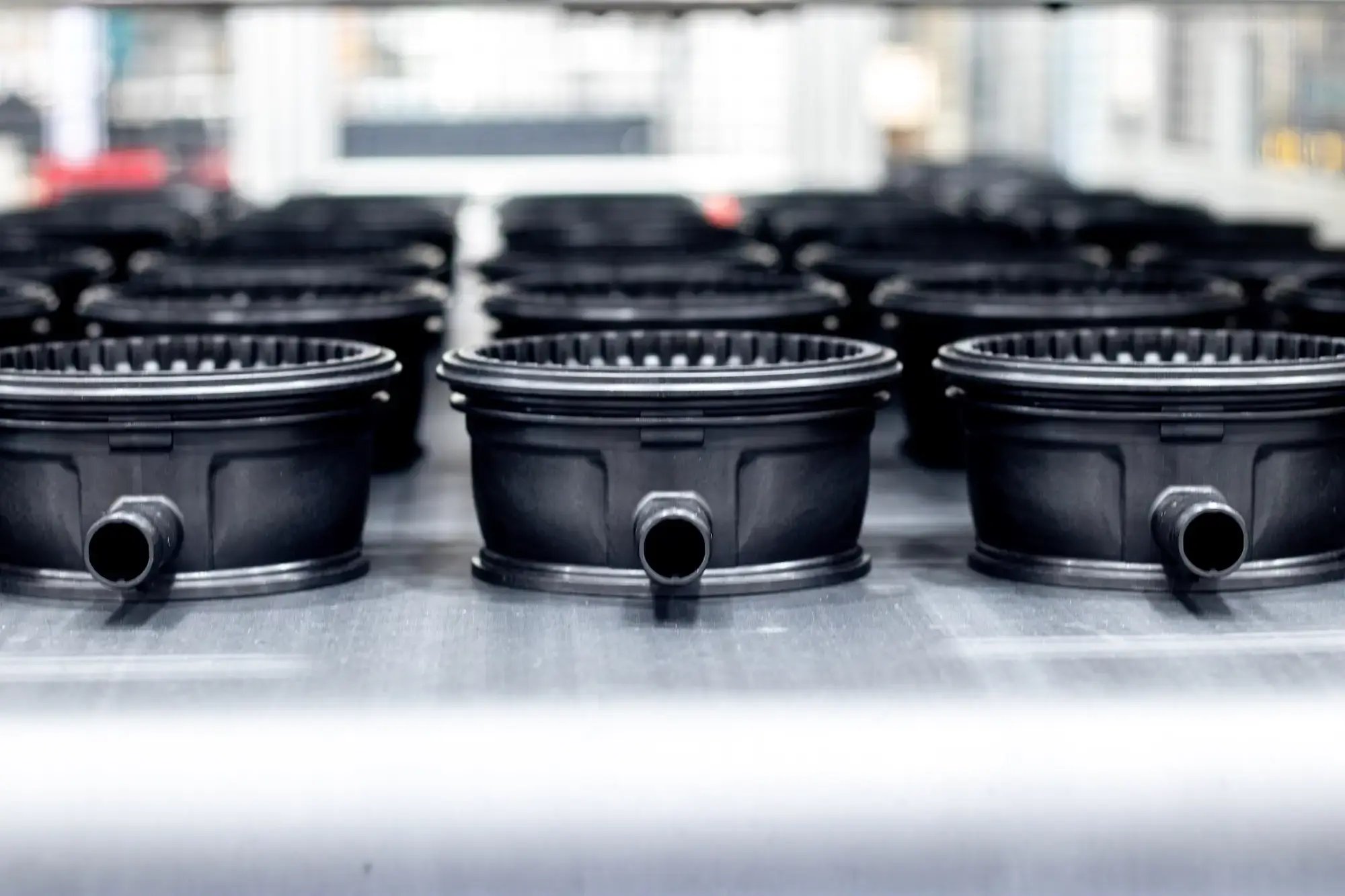
Fortune 500 manufacturers hold their injection molding partners to a different standard, because the parts are different. Components held to tight tolerances, running for years at volume, where dimensional drift becomes a recall and a late tool becomes a launch delay. Programs are larger, tool counts are higher, documentation requirements are heavier, and the cost of a supplier failure is measured well beyond scrap.
Kaysun has built its business around that tier of program. We run multi-tool projects of 30 or more tools and staff in-house engineering deep enough to work alongside an OEM's own engineering team.
Kaysun at a Glance:
- Founded in 1946 in Manitowoc, Wisconsin
- Safety-critical, tight-tolerance components for complex applications
- Demonstrated experience on programs of 30 or more tools
- MedAccred Plastics accredited since 2020; ISO 13485:2016, IATF 16949:2016, and ITAR certified
- RJG Master Molder I and II and Systematic Molding certified technicians on site
- In-house engineering: DfM, mold flow analysis, material selection, tool design and qualification, metal-to-plastic conversion
- Markets served: medical, industrial, automotive and heavy truck, aerospace & defense, consumer
What Fortune 500 Manufacturers Require From an Injection Molder
Enterprise programs fail at the supplier level for predictable reasons: the molder can quote the part but can't support the engineering; the molder can run some but not all tools; the molder passes the audit and then can't hold the process across a two-year production run.
Before a Fortune 500 OEM awards a program, its engineering, quality, and purchasing teams are each answering a different question about the molder, and the molder has to satisfy all three.
Engineering can support our team, not just take our print. Enterprise part designs arrive with open questions such as moldability, material behavior under load, and tolerance stack in an assembly. When a molder quotes the print as drawn, the moldability problem still exists. It just surfaces at first run, when fixing it means cutting steel twice.
Capacity to run the whole program, not a piece of it. Large programs mean many tools, often launching in overlapping phases. A molder that can take on only a portion of the tooling makes the OEM manage a multi-supplier launch, which is the exact coordination burden the OEM is trying to avoid.
Process control that holds across the production run. Consistency at first run means little. What matters is whether part 50,000 matches part 500, across shifts, operators, and material lots.
Documentation and traceability that survives an audit. Enterprise quality systems require records the molder may need to produce years later. That has to be designed into the program at the start.
Engineering Bandwidth
Engineering bandwidth is the clearest predictor of whether a molder can carry a large program, and it's the hardest thing to assess from a capabilities sheet. No single indicator predicts it; instead, it’s a combination of in-house capabilities working together.
Kaysun evaluates bandwidth across four in-house capabilities:
Cross-functional teamwork. Complex part engineering doesn't happen in a silo. Kaysun engineers work from customer insights alongside internal quality and tooling teams, so a design decision gets pressure-tested from three directions before it reaches production.
Quality assurance applied at the front end. Geometric dimensioning and tolerancing (GD&T) and gauge repeatability and reproducibility (GR&R) studies run early, and those results inform everything downstream — inspection fixtures, gauging programs, and the quality plan itself. Critical part characteristics stay consistent from engineering through manufacturing because the measurement system was validated before production began.
Complex process development. Kaysun's engineering team specializes in scientific molding and Design for Manufacturability (DfM), supported by a processing team with RJG master molder certification. The result is repeatable production regardless of equipment line or lot-to-lot material variation.
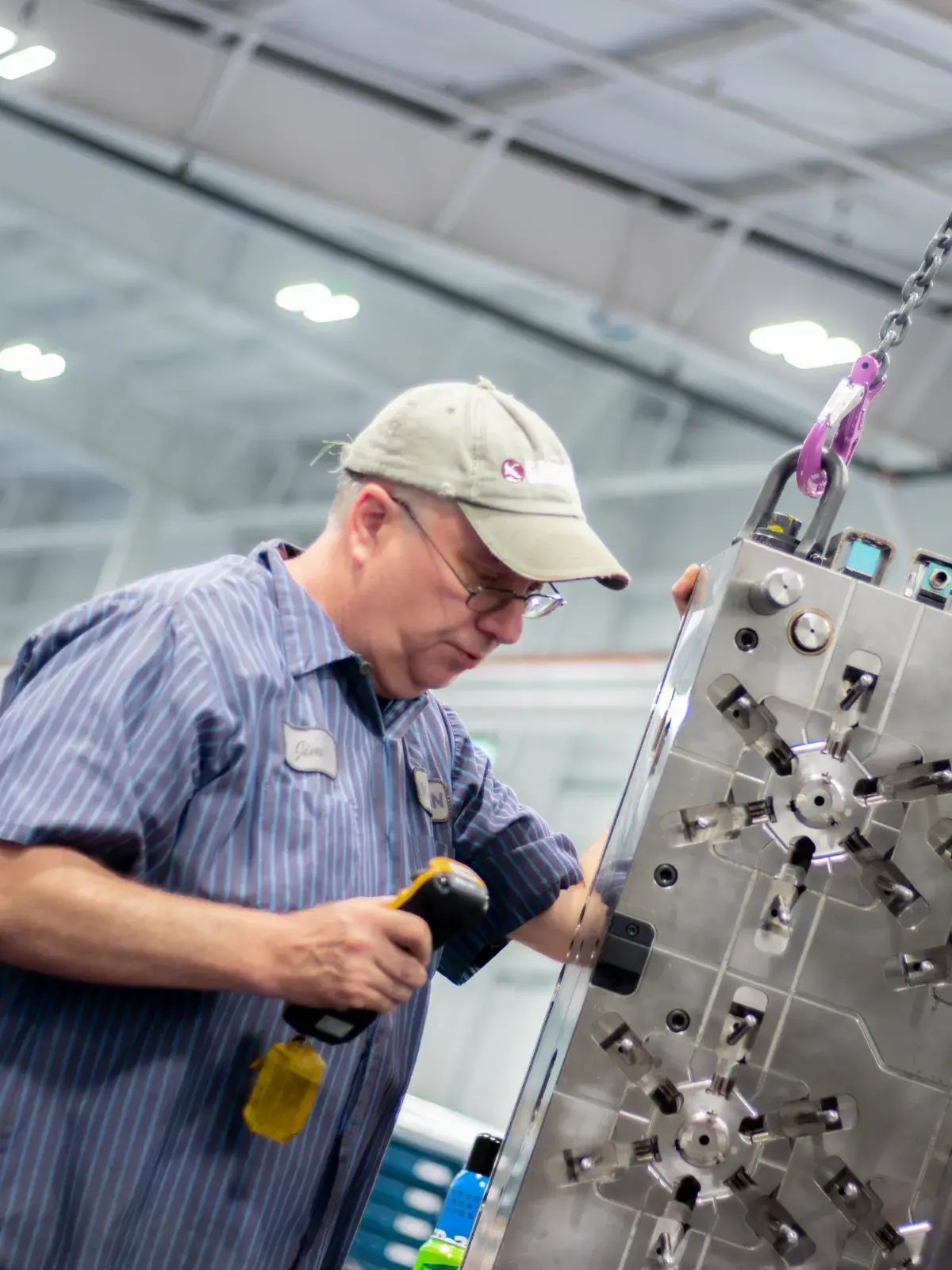
Tooling design and build. Kaysun's in-house tooling team brings decades of experience to decisions about design, tool metals, and materials. Most of the time- and cost-saving discoveries on a program happen in this phase.
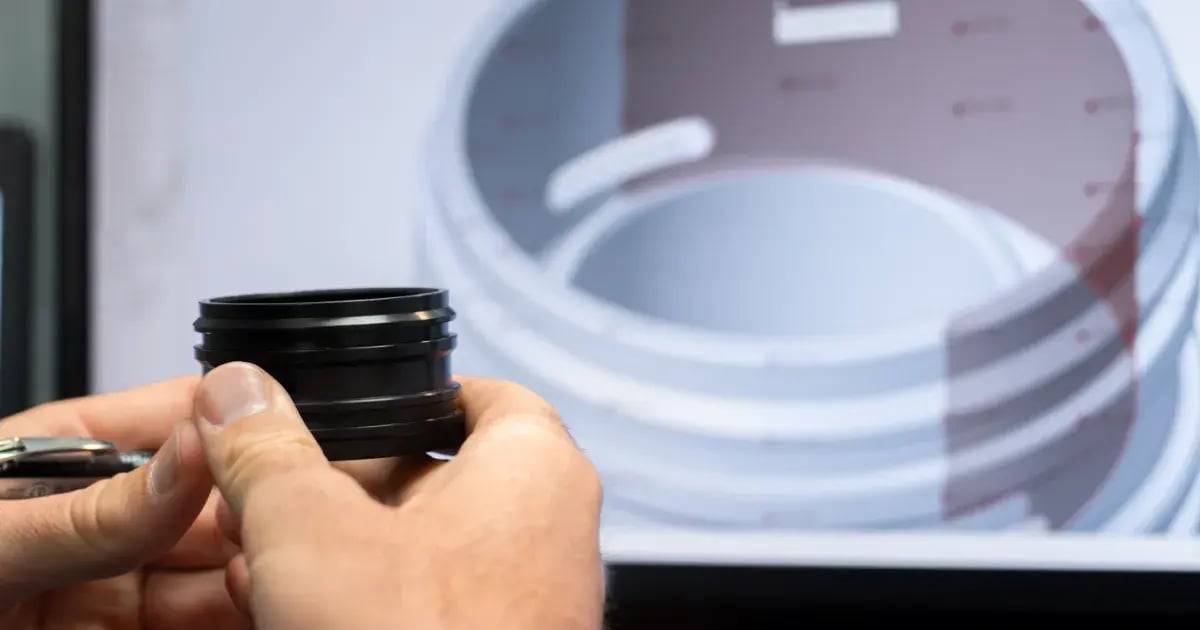
The practical effect is that moldability problems surface during design review rather than at first run. Warp, sink, gate placement, tolerance achievability, and cooling behavior get evaluated before steel is cut, which is the difference between an adjustment and a tooling rework.
How This Plays Out
This kind of design review shapes real programs:
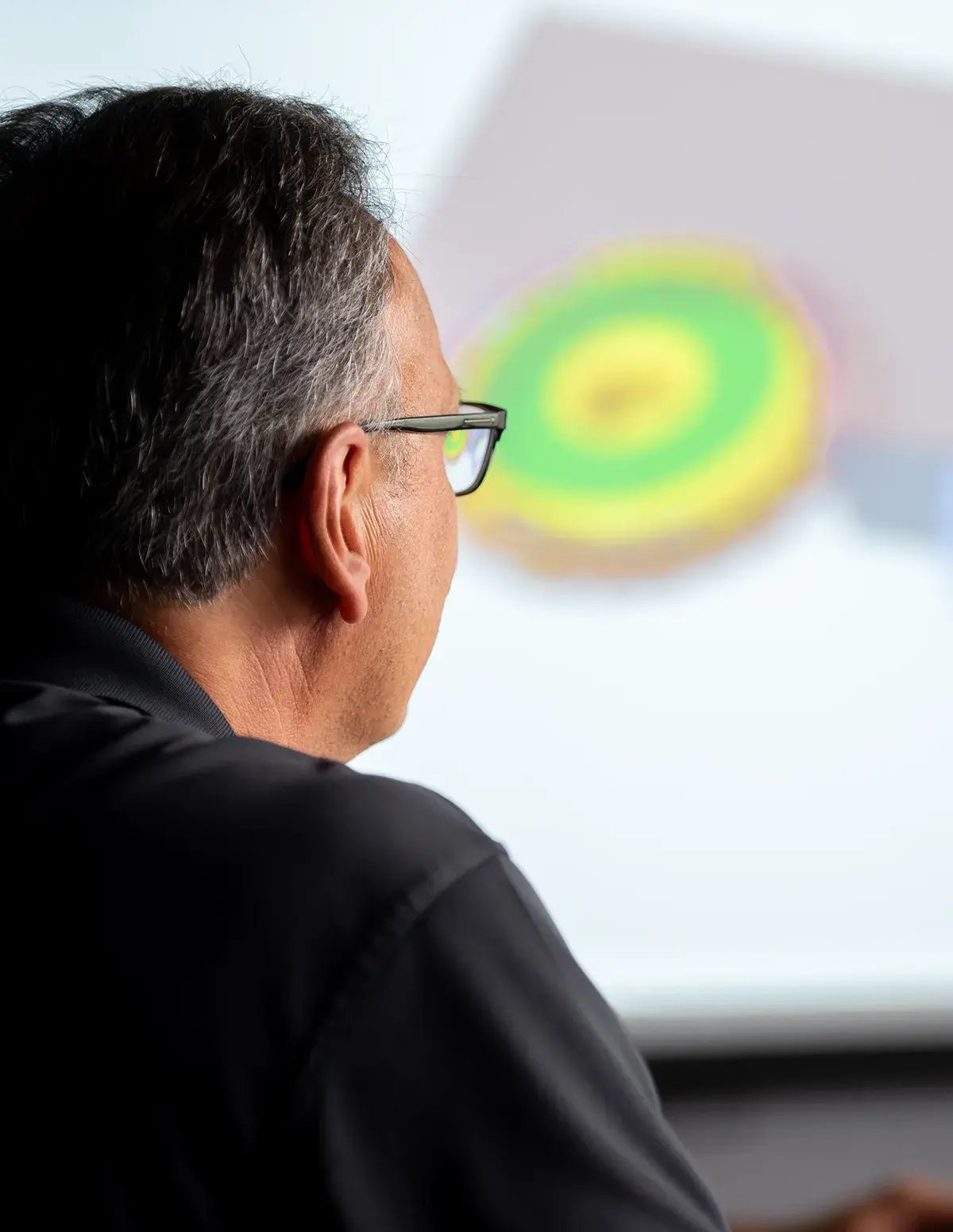
- For a consumer plumbing manufacturer, Kaysun ran multiple mold flow iterations, adjusting gate locations and flow leaders, to move weld lines away from the high-pressure zones flagged in the customer's FEA analysis. The resulting design was prototyped on a single-cavity tool and confirmed through functional testing before the program moved into production tooling with high confidence.
- As part of a housing application for the electric transmission industry, repeated Moldex 3D simulation runs clarified how the engineered material would warp, informing a prototype tool now approved for initial production while the volume tool is built alongside it.
RELATED RESOURCE:
How This Plays Out
Kaysun’s bandwidth shows up across programs already running:
- An automotive customer awarded Kaysun a 12-tool package spanning 36 manufacturing numbers across different colors, sizes, and versions. Kaysun qualified the tools in stages to keep the customer's assembly line running, with some tools reaching PPAP approval in as little as one month against a typical 3-4 month timeline.
- Kaysun supported a new medical customer with a three-tool package requiring substrate and two-shot overmolding across multiple color versions. This resulted in retrofitting an existing press with a rotary platen and second barrel, and updating heat-stake assembly transfer equipment for threaded inserts.
- A consumer PEX fitting customer, after onboarding two tools, named Kaysun its highest-rated supplier and followed with five additional transfer tools now in approval, with more in the pipeline.
Multi-Tool Program Capacity
Most custom molders are built around programs of a handful of tools. Enterprise programs routinely require far more, launching on overlapping schedules with interdependent parts.
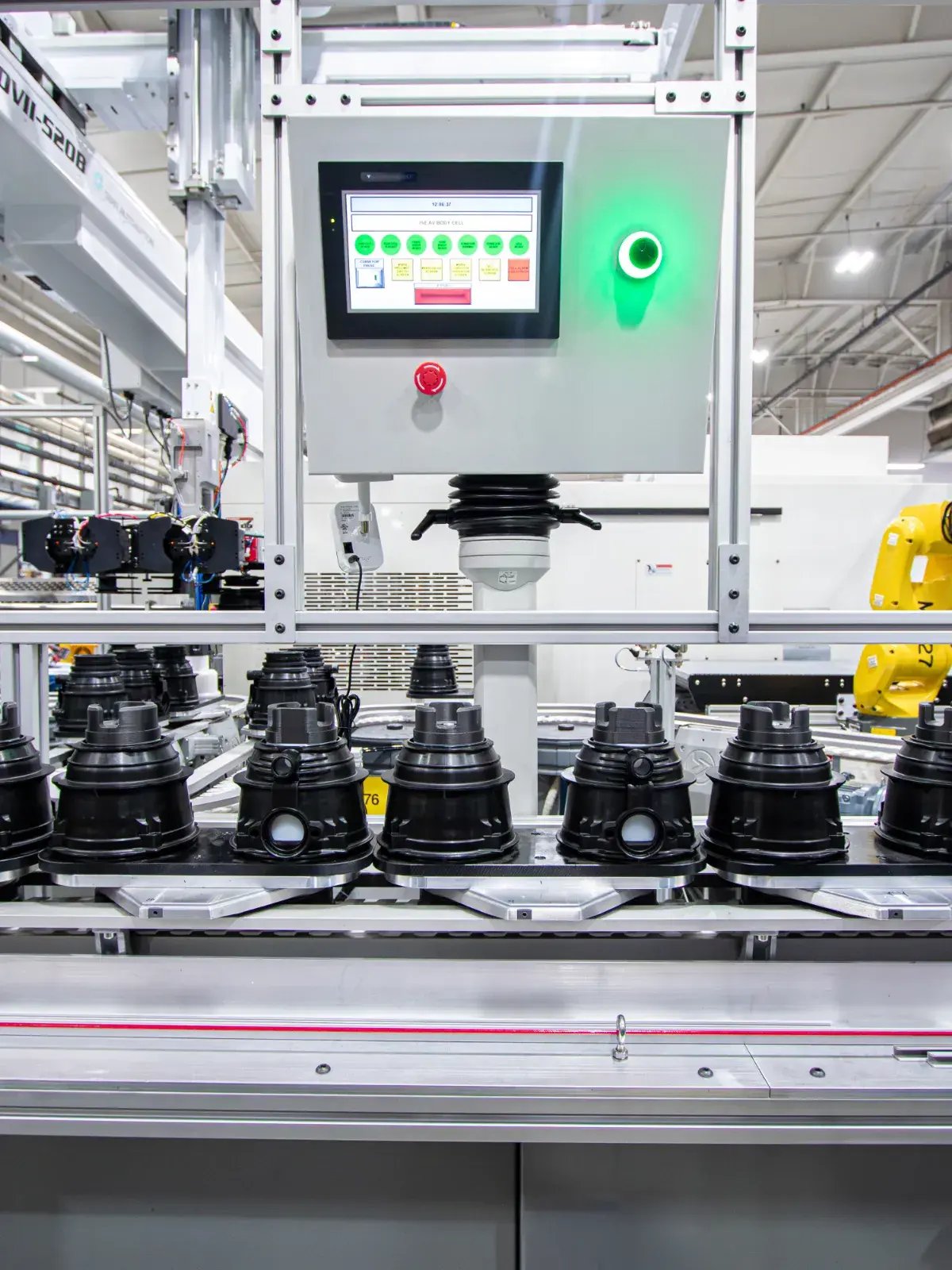
Kaysun has demonstrated experience running multi-tool programs. That capacity comes down to the speed and project management skills of the team as much as the equipment on the floor.
The tooling math is where most molders lose the schedule.
Tooling rarely arrives with perfect dimensions. After qualification, adjustments are almost always needed to hit design specifications. Most injection molders send the tool back out for those adjustments, which takes a month or more. Kaysun makes most adjustments in-house, fine-tuning core and cavity geometry after initial sampling.
On a single-tool program that's a scheduling inconvenience. On a 30-tool program with overlapping launches, it's the difference between a launch window you can hold and one you can't.
What else running at that scale requires:
- A project management structure that tracks every tool independently while holding the program schedule
- In-house tool design, qualification, and management, including steel selection matched to run size, part complexity, finish requirements, and whether the resin is abrasive or corrosive
- Engineering staffed to review dozens of designs concurrently rather than sequentially
- Documented process development for each tool, not a single process replicated across a family
Customer perspective:
“Kaysun exceeded our expectations in all areas. They made a complex, gigantic program easy from an engineering standpoint. Working with the Kaysun engineering team is like a hot knife through butter.”
DAVE D.
Senior Industrial Designer
Process Control and Scientific Molding
Enterprise programs are judged on consistency across the full production run, which is a process control question rather than a machining question.
Scientific molding is a data-based method for developing and holding a molding process. Rather than dialing in a process by trial and error, the molder uses mold flow analysis, Design of Experiments, and sensor-based cavity pressure monitoring to define a validated process window, then controls production to it.
The studies behind that window are specific and named:
- Rheology and viscosity curve — establishes the shear and temperature strategy for stable fill
- Velocity profiling — identifies the fastest defect-free fill, which also reduces cycle time
- Cavity-pressure monitoring — enables decoupled molding and detects process drift in production
- Gate seal study — confirms pack and hold time, preventing warp and voids
- Design of Experiments — isolates the critical variables and defines the processing window
Kaysun's process runs from review and sensor strategy through part and tooling design, tool build, DOE-established process window, production with statistical process control and alarms, and ongoing "golden run" audits against the validated documented process.
The processing team holds RJG Master Molder I and II and Systematic Molding certifications, and engages from tool qualification through production, including legacy tool rescue on transferred programs.
The value to an enterprise quality team is that the process is documented rather than resident in an operator's experience. When a program runs for years across shift changes and staff turnover, that distinction determines whether quality holds.
RELATED RESOURCE:
Validation and Traceability
Regulated and safety-critical programs require evidence, not assurance. An audit tests records, not intentions.
Kaysun's validation framework rests on five principles: the process is defined through experimentation, controlled within verified limits, measured against capability metrics, traceable across production runs, and documented for audit readiness. Programs that satisfy all five are the ones that stay stable after launch.
Validation. Kaysun has extensive experience with IQ, OQ, and PQ protocols, and supports PPAP and APQP submissions for automotive programs. Process windows are established through Design of Experiments rather than validated at a single nominal setting, which is the difference between a process that absorbs real production variation and one that drifts toward tolerance limits six months in. Quality plans, risk-based controls, and traceability requirements get defined during program planning rather than assembled after the fact.
Traceability. Traceability at the level Fortune 500 quality teams expect means finished components can be linked back to everything that produced them: raw material lot numbers and supplier certifications, the specific machine, tool, and cavity that made the part, the molding parameters and approved machine settings in effect at the time, and the in-process and final inspection data.
That linkage is what makes a deviation investigation fast instead of speculative. When a dimensional problem surfaces, the questions are immediate: which lot, which material batch, which cavity, what were the process conditions, and what else shipped from that run. A molder whose records answer those questions in hours can contain the problem. One who can't reconstruct that history contains it by quarantining everything.
Kaysun maintains full lot control and device history recordkeeping to meet FDA, MDR, and other regulatory requirements, supported by in-process monitoring with SPC and Cpk/Ppk analysis, and dimensional verification by CMM, CT scanning, vision systems, and leak testing.
Change control. Structured change control keeps a validated process defensible when something changes. On a medical housing program, inspection results falling outside gauge requirements triggered an investigation that traced the root cause to damage in a lifter system. Kaysun notified the customer, submitted a supplier-initiated change request, replaced the tooling, developed and submitted a re-validation protocol, and completed a validation report confirming the process had returned to a controlled state.

Engineered Materials
Material selection is where enterprise programs most often encounter avoidable failure, because the resin that performs on a bench sample may not survive the application's real thermal, chemical, or mechanical environment.
More than 25,000 engineered materials are commercially available. Kaysun narrows that in three steps:
Discuss. A plastics engineer works through what the material actually has to do — expected physical load, mechanical function, temperature range including extremes and fluctuation, chemical exposure, and whether dissimilar materials will meet in the assembly.
Research. Those answers drive a search of Kaysun's in-house materials database, built across decades of molding work, against the characteristics the application requires: strength, rigidity, chemical and temperature resistance, flexibility, impact resistance, appearance, conductivity or shielding, frictional properties, flame resistance. Kaysun consults its materials suppliers in parallel.
Recommend. The output is a short list, usually three or four options, balanced against both performance and price.
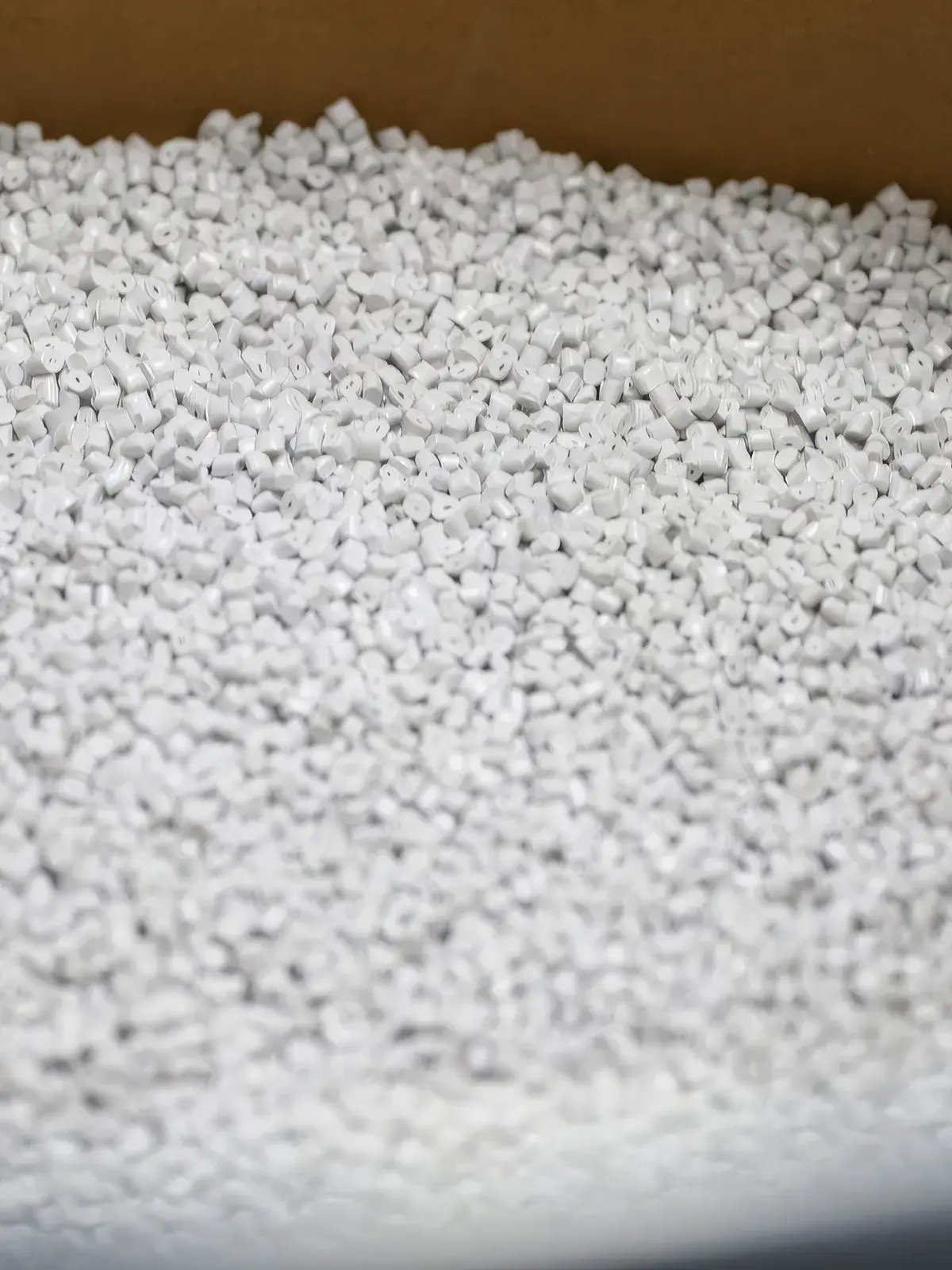
That process covers the decisions enterprise programs actually turn on: thermoset versus thermoplastic, amorphous versus semi-crystalline, and which additives or reinforcing fillers to specify. Long glass fiber for stiffness and temperature performance. Short glass fiber where appearance matters and glass content stays at or below 3%. Carbon, stainless steel, or Kevlar fillers where conductivity or shielding is the requirement.
Material variation between lots also affects process stability, which is why capability studies verify performance at the upper and lower operating limits rather than at nominal alone. A process that holds only at its center point is a process waiting for a resin lot to move.
Kaysun also maintains qualified alternative materials and acts as a single point of contact for materials management, which matters on multi-year programs exposed to resin availability risk.
Metal-to-plastic conversion is a related capability worth raising early. Converting a metal component to an engineered resin typically produces 25-50% cost savings without compromising quality or function, and the evaluation is most productive during design rather than after tooling.
Frequently Asked Questions
What should a Fortune 500 manufacturer look for in an injection molding partner?
Five things: in-house engineering capacity to support the OEM's design team rather than only quote from a print, the tooling and press capacity to run the full program instead of a portion of it, documented process control such as scientific molding with cavity-pressure monitoring, validation and traceability systems that satisfy enterprise quality audits, and the operational stability to carry a multi-year program. Certifications indicate a baseline. Engineering bandwidth and multi-tool capacity separate molders at this tier.
How many tools can a custom injection molder handle in one program?
It varies widely. Most custom molders are structured for programs of a few tools. Running a significant number of tools in a program requires dedicated project management, in-house tool design and qualification, press capacity across a broad tonnage range, and enough engineering staff to review designs concurrently. Kaysun has demonstrated experience on programs of 30 or more tools.
What is engineering bandwidth in injection molding?
Engineering bandwidth is a molder's capacity to provide design, material, and tooling expertise across multiple concurrent projects. No single indicator measures it. Four in-house capabilities together determine it: cross-functional teamwork between engineering, quality, and tooling; front-end quality assurance including GD&T and gauge repeatability and reproducibility studies; complex process development grounded in scientific molding and DfM; and in-house tooling design and build. Low bandwidth typically surfaces as problems discovered at first run that should have been caught in design review.
Why does in-house tooling matter on a large injection molding program?
Tooling rarely arrives dimensionally perfect, and adjustments after qualification are normal. Molders who send tools back to an outside builder for those adjustments typically wait a month or more per tool. A molder who adjusts in-house absorbs that iteration without losing the schedule, which compounds across a program running 30 or more tools on overlapping launches.
What traceability should an injection molder provide on an enterprise program?
Records linking every finished component to the material lot and supplier certification behind it, the machine, tool, and cavity that produced it, the molding parameters in effect at the time, and the in-process and final inspection data. Those links are what allow a deviation to be traced to a specific lot and cavity rather than contained by quarantining an entire production run. Ask any prospective molder how quickly they can reconstruct that history for a part shipped a year ago.
Start a Conversation
Kaysun is built for complex programs. That makes us a strong fit for some companies and the wrong choice for others, and we'd rather both sides know which in the first conversation than the third.
Programs that fit well:
- Companies with annual revenue above $100 million
- Annual program volume above 50,000 units
- Parts with complex geometries and tight tolerances that require engineered materials or processes
- An active program or a part design already in development
- Medical, industrial, automotive & heavy truck, aerospace & defense, or consumer applications
Programs we're not right for:
- Micro molding
- Thermoset or rubber molding (Kaysun molds thermoplastics exclusively)
If your program falls outside those parameters, we'll tell you directly and point you toward a molder better suited to it.
Does your company fit our ideal customer profile?
Complete the form to request a free consultation with our plastic engineering experts.